


One Planet
Pathways to Net Zero
- Subject Area
- Sustainability
- Estimated Classroom time
- 50 minutes
- Difficulty
- 2 of 3 — Moderate


What does net zero require, and what is our role in it?
Main Theme: Net zero is a balance, not a switch. The clean energy revolution shows the scale and speed of change already happening, and how much further there is to go. When learners understand that structural change and personal choice work together, they begin to see themselves not as bystanders to the climate challenge, but as agents of change.
Grab your resources
Session Plan
The full session, stage by stage: what to say, what to do, and what to expect from the students.
Slide Deck
Everything you'll put on the board, in order. Speaker notes included.
ITZA Pathways
One link covers everything for this session: both pathways, the minigame for early finishers, and the extension activities.
Learner Journal
The five-part reflection learners complete in the plenary of every session.
Session objectives
 Explain what net zero means, and why it is about balancing emissions rather than stopping every activity that causes them.
- Describe key ways to cut emissions across energy, transport, food and industry, including the role of solar, wind, hydroelectric and nuclear power.
- Explain how biomimicry works, using the thorny devil to show how nature can inspire designs such as water harvesting and solar panel cooling.
- Evaluate whether actions genuinely move us towards net zero, telling real emissions cuts from offsetting that only looks effective.
- Connect personal choices to systemic change, using evidence from the session to explain how individual and collective action speed up the transition.
Misconceptions to watch for
Net zero means zero emissions ever.
A world with no emissions at all isn’t possible, because everyday life needs energy. Net zero means cutting emissions as far as possible, then balancing out the rest, so the planet stops heating up.
Anything labelled ‘green’ is automatically good for net zero.
Some green-sounding choices, such as clearing an old forest for a solar farm or buying a new electric car every year, can cause more emissions than they save. What matters is the whole picture.
If a student asks…
- If we switch our power stations to clean energy, isn’t that enough?
- Clean electricity is vital, but transport, industry and farming still produce emissions. Net zero is a balance across every sector, not a single fix.
- Can’t we just plant trees or buy offsets to cancel out emissions?
- Trees store carbon, but usually nowhere near an airport’s or a factory’s worth. Offsetting leaned on this way becomes a distraction, so real cuts have to come first.
Got longer?
Teacher Tips
Hook
- Start with “What does it mean to be able to adapt?” and give a full minute of discussion before you take feedback. You might expect answers like “change” or “get used to it”. Then ask “How easily can you adapt when the world around you changes?” The reveal is a small but important one: it depends on what is changing. It’s worth saying that plainly, then putting the four scenarios up.
- Partners can argue about the four questions: which scenario would be easiest to adapt to, which would be hardest, which changes only affect you, and which need the whole community. The interesting disagreements are about which need everyone working together, so it’s worth listening for those when you take feedback.
- You could steer the class discussion towards the conclusion the session depends on: adapting is sometimes possible for an individual, but it often takes far bigger changes than any one person can make. That’s the door into the big question: what does net zero require, and what is our role in it?
ITZA Pathways
- Pathway 1 (The Clean Energy Revolution) covers net zero as a balance, how the thorny devil moves water through its scales by capillary action, and biomimicry applications such as cooler solar panels. Pathway 2 (How We Hit Net Zero) covers decarbonising energy, transport, food and industry, building resilience to extreme weather, and connecting personal choice to systemic change.
- Circulate with “How has this changed how you think about your carbon footprint?” You might push for something specific: which part of their own day, and could they change it on their own or does someone else have to help?
- The line that matters here: net zero doesn’t mean stopping life. It means the greenhouse gases we produce are balanced by those we remove. It’s worth checking learners haven’t slipped into “zero emissions ever” by asking “Why can’t emissions simply be zero?” Everyday life needs energy.
- You could ask learners to explain capillary action in their own words, and “Why is a desert lizard in a net zero lesson at all?” Biomimicry is studying how living things solve a problem and using that idea to inspire human design. A learner who can name the problem the design solves and how it saves energy or cuts emissions has understood it.
- The evaluating-actions task turns on the difference between real cuts and offsetting. Try asking “Could you cancel out any amount of emissions by planting trees?” and “Is everything labelled ‘green’ automatically good for net zero?” Real cuts come first, and offsetting only works alongside them.
- If a learner asks whether nuclear power is renewable, it isn’t. It releases almost no greenhouse gases, but its fuel is finite, so many experts see it as a bridge towards fully renewable power.
- You may hear both extremes: despair that nothing can be done, and the belief that technology alone will fix everything. The session holds the size of the challenge and the progress already under way at the same time.
Classroom Activity
- My Net Zero Audit: learners audit their own day with four columns. It helps to model it first with a moment or two from your own day, so they can see what a good row looks like, including the last column, “Who needs to help?” That column is where it moves from personal choices to the wider system.
- Allow the full 2 minutes for the first column: three different moments in their day, with detail. “Bus to school” is more useful than “travel”, and “toast and a coffee” is more useful than “breakfast”.
- It helps to keep it about routines, not blame. Some learners have no say over how they travel or what’s cooked at home, and that’s exactly what the last column is for. If a learner writes “me” in every row, ask “Could you change this on your own, or does someone else have to help: family, school, the council, a business?”
- The carbon impact column doesn’t need to be exact. A rough sense of higher and lower is the aim, and learners can discuss it with a partner or look it up. Allow 5 minutes for the other columns.
- For the closing sentences, ask for three specific, realistic actions: one personal, one for the school and one for government. You can push past “use less plastic” or “the government should do more” to something a school or a government could actually do.
- Some learners may do better working with a partner. For early finishers, you could ask them to rank their changes from easiest to hardest, then answer “Which changes have the biggest impact but are hardest to make?”
- To wrap up, hear from a few learners about their actions, and finish on the idea that individual action makes a difference alongside systemic change, not instead of it.
Plenary
- Part 2 asks which of energy, transport, food and industry is hardest to change. There’s no right answer, so you can push for reasoning: “Who has to change, what does it cost, and how fast could it happen?” Learners can link back to their audit: “Which sector does each of your rows sit in?”
- Part 2 asks which of energy, transport, food and industry is hardest to change. There’s no right answer, so you can push for reasoning: “Who has to change, what does it cost, and how fast could it happen?” Learners can link back to their audit: “Which sector does each of your rows sit in?”
- The lock-in is from Lord Nicholas Stern, an economist who led the Stern Review on the economics of climate change. After reading it, you could then ask what would actually be better in their own life if that transition happened, such as cleaner air, safer streets or a fairer economy. It moves learners from anxiety towards agency.
Learner journal tip
If using the editable journal, it helps to have each learner make their own copy at the start of the course and save it somewhere easy to find again. Perhaps in a folder on their laptop or in their school drive. It carries across every session, so if the plenary runs short, they can finish Part 2 or the later sections at home without losing earlier reflections.
Extensions
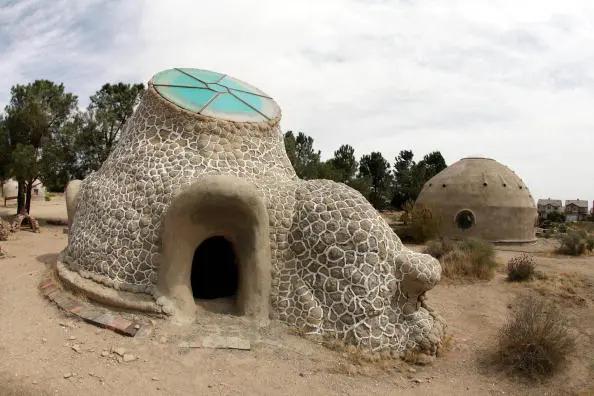
Extension 1
Designed for Mars, but Made for Earth
Discover the Mars invention supporting life on Earth.
 Explore(opens in a new tab)
Extension 2
Sustaining the City that Never Sleeps
What does it take to support more than eight million people every day?
Curriculum links
- Science & Biology
- Energy sources, renewables and nuclear, biomimicry, capillary action, evaporative cooling, the carbon cycle, greenhouse gases.
- Geography
- Energy systems and generation, climate resilience, extreme weather, uneven global impacts of climate change, sustainable development.
- Modern Studies
- Net zero policy and targets, the role of the UN and governments, corporate accountability, the transition to clean energy.
- Health & Wellbeing
- Citizenship and environmental responsibility, informed everyday choices, understanding global issues that affect communities.
- RME & Ethics
- A fair transition to net zero, the ethics of offsetting and greenwashing, individual and shared responsibility for emissions.
Want the full background on go net zero?
Read the deep dive